
Medical IDs for Caregivers
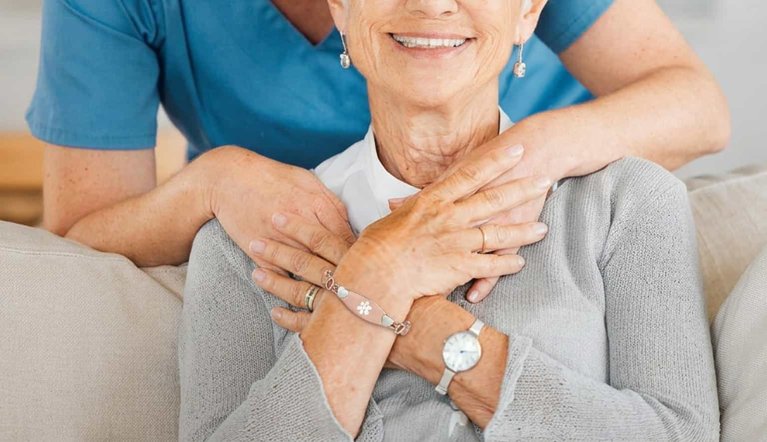
A caregiver is responsible for the direct care, protection, and assistance of someone with special needs, chronic illness, or a disability. With millions of people around the world acting as caregivers, it is vital to safeguard your own health so you can continue to care for others. Wearing a medical ID ensures that if you face an emergency, first responders instantly know someone is depending on you.
Why Caregivers Need a Medical ID

Protect Your Own Health
Caregivers experience chronic conditions at nearly twice the rate of non-caregivers. An ID ensures your own medical needs are met if you become sick or injured.

Alert First Responders
Instantly notify emergency personnel that someone at home or nearby depends on your direct care, ensuring your loved one is never left unattended.

Activate Backup Care
Direct responders to your wallet card to quickly reach secondary caregivers or family members who can step in immediately.
Conditions Often Requiring a Caregiver
Protecting Those in Your Care
Caregiving is often essential for individuals managing chronic illnesses, cognitive decline, or severe physical limitations. To ensure maximum safety, both the patient and the caregiver should wear a medical ID so first responders are immediately aware of the relationship. Common conditions requiring direct care include:
- Cancer
- Dementia
- Alzheimer’s disease
- Parkinson’s disease
- Developmental disabilities
- Traumatic brain or spinal cord injuries
- Stroke
- Mental health and psychiatric disorders
- Advanced heart disease
- Multiple Sclerosis
- Advanced diabetes
- Debilitating arthritis
- HIV/AIDS
Source: Science Care
What to Put on a Caregiver Medical ID
Engraved information is vital for first responders. Be sure to include your identity, your own health data, and details about your care recipient.

Your Name & Conditions
List your own medical alerts first (e.g., Diabetes, Heart Disease, allergies).

Care Recipient Details
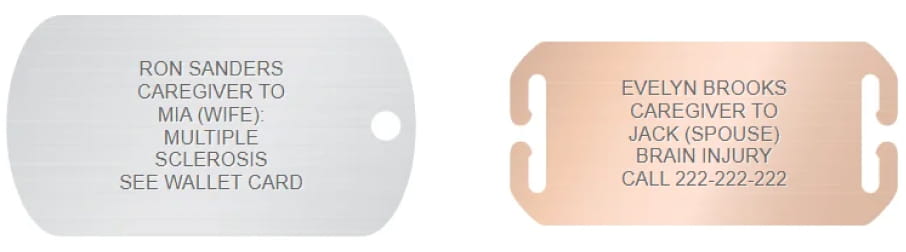
Include their name, your relationship to them, and any critical conditions they have (e.g., Caregiver for Husband w/ Alzheimer's).
Emergency Contacts
Engrave the phone number of a family member or secondary caregiver who can take over.

Expandable Wallet Card
Use a wallet card for overflow information like addresses and medications. Learn More
Recommended Engraving
The most effective caregiver IDs provide a clear roadmap for responders. Use the following structure to ensure both your health and the safety of your care recipient are prioritized in an emergency:
- Your Name & Medical Conditions
- Caregiver to [Name]
- Recipient’s Medical Condition
- Backup Emergency Contact Phone
Caregiver Stories: Finding Peace of Mind
Caregiver Community: Ensuring Your Loved Ones Are Never Alone
It might sound strange, but as a caregiver, you have to remember that people are relying on you. If something happens to you, they need to be protected. By wearing a medical ID, you ensure that first responders are alerted to your role, allowing an emergency contact to step in and make sure your loved one is okay. Read more at Senior Citizen Website
Suzanne Geffen Mintz: Peace of Mind for the Family Caregiver
Have you considered the possibility that you could have an accident or get sick? I know we never think anything is going to happen to us, but what if it did? I wear a family caregiver medical ID that tells emergency personnel that I care for my husband Steven and he will need help. It has given me such a sense of peace and also empowerment I never would have believed possible. A Family Caregiver Speaks Up: It Doesn't Have to Be This Hard
Caregiver Community: Ensuring Your Loved Ones Are Never Alone
It might sound strange, but as a caregiver, you have to remember that people are relying on you. If something happens to you, they need to be protected. By wearing a medical ID, you ensure that first responders are alerted to your role, allowing an emergency contact to step in and make sure your loved one is okay. Read more at Senior Citizen Website
Suzanne Geffen Mintz: Peace of Mind for the Family Caregiver
Have you considered the possibility that you could have an accident or get sick? I know we never think anything is going to happen to us, but what if it did? I wear a family caregiver medical ID that tells emergency personnel that I care for my husband Steven and he will need help. It has given me such a sense of peace and also empowerment I never would have believed possible. A Family Caregiver Speaks Up: It Doesn't Have to Be This Hard
Real-World Protection in Emergencies
Many caregivers are older adults themselves—averaging 63 years of age—and may manage their own health challenges. In a crisis, a medical ID does more than just list a condition:
Ensures continuity of care: It prompts responders to reach secondary caregivers immediately so your loved one is never left alone.
Expedites reunions: For care recipients with Dementia or Autism who may wander when scared, an ID helps authorities reunite families faster.
Safeguards the caregiver: It ensures your own medical needs are addressed while you are focused on others.
Download Our Free Guide
Get clear answers to common questions about medical IDs, from materials to what to engrave.