
What to Engrave on a Medical Alert ID
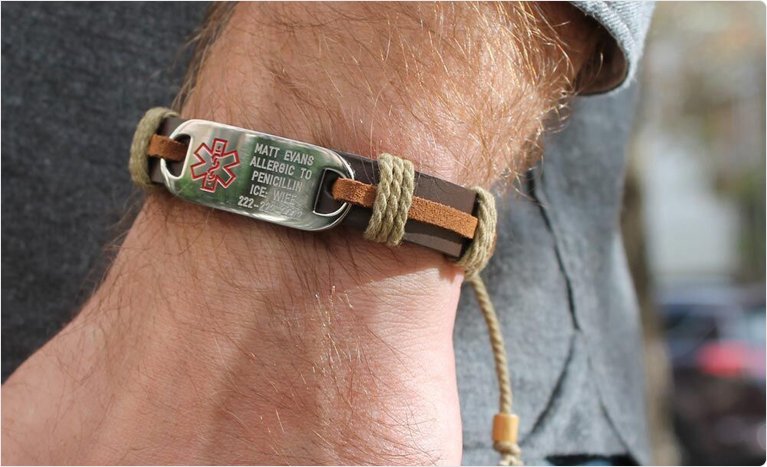
Tips for Engraving a Medical ID
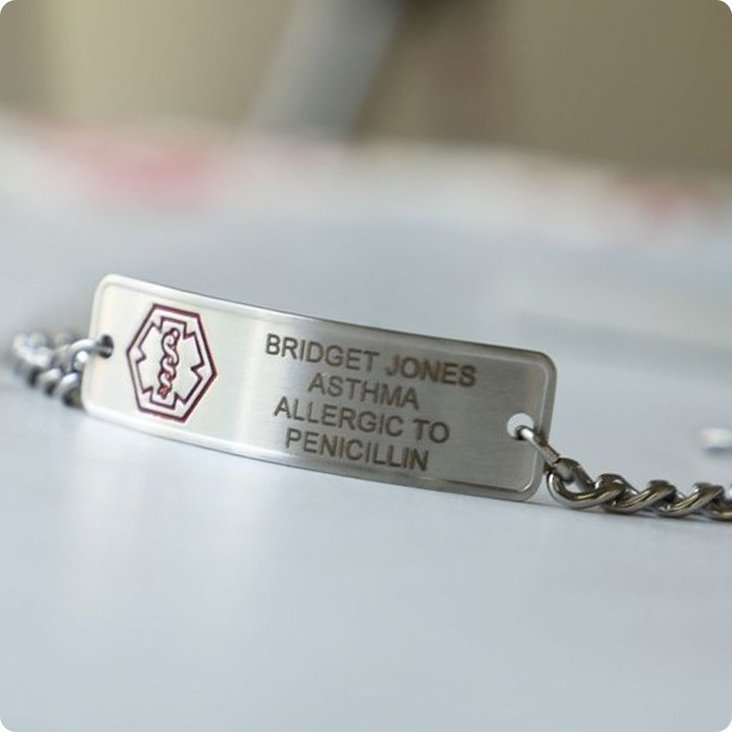
Your custom engraving is the most important part of your medical alert jewelry. If you become unconscious, the ID speaks for you. Emergency responders are trained to check your neck and wrist first, so your engraving must be accurate and easy to read.
Note: We offer unlimited engraving constrained only by the physical size of the jewelry you choose.
What to Include on Your Medical ID
Space is limited — always start with what a first responder needs to see first, and work downward.

Your Name
Including your name gives emergency responders a quick way to identify and address you as they begin treatment. Use your first and last name, or use your first initial and last name (e.g., K. Jones).

Medical Conditions
List chronic conditions that may affect emergency treatment, such as Diabetes (Insulin Dependent), Epilepsy, Alzheimer’s, heart conditions, or bleeding disorders.

Allergies & Medications
Engrave severe allergies (food, insect, penicillin) and daily prescriptions like immunosuppressants to prevent dangerous drug interactions in an emergency.

Emergency Contacts
Add an ICE (In Case of Emergency) phone number. This is especially crucial for children, individuals with autism or dementia, or those with dedicated caregivers.
Standard Medical Abbreviations
To maximize the space on your medical ID, you may need to abbreviate certain terms. It is critical to use standard abbreviations that are instantly recognized by emergency medical personnel.
Browse the categories to the right to find the proper, universally accepted abbreviations for common medical conditions, directives and more.
Engraving Examples
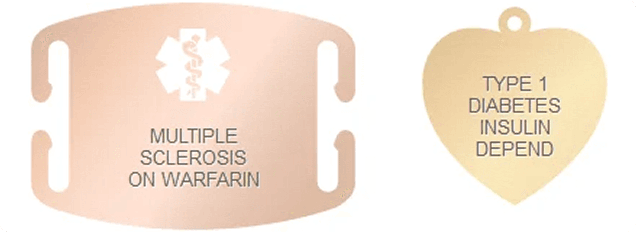
- ALGY: Allergy
- DNR: Do Not Resuscitate
- HI: Hearing Impaired
- ICE: In Case of Emergency
- NKA: No Known Allergies
- CHF: Congestive Heart Failure
- CHD: Congestive Heart Disease
- COPD: Chronic Obstructive Pulmonary Disease
- HBP: High Blood Pressure
- HTN: Hypertension
- PE: Pulmonary Embolism
- IDDM: Insulin Dependent Diabetes Mellitus
- T1D: Type 1 Diabetes
- T2D: Type 2 Diabetes
- MS: Multiple Sclerosis
- PD: Parkinson’s Disease
- PTSD: Post-Traumatic Stress Disorder
- GAD: Generalized Anxiety Disorder
- TBI: Traumatic Brain Injury
- EDS: Ehlers–Danlos Syndrome
- FMS: Fibromyalgia Syndrome
- IBD: Inflammatory Bowel Disease
- IBS: Irritable Bowel Syndrome
- KS: Kawasaki Syndrome
- MCS: Multiple Chemical Sensitivities
- MD: Muscular Dystrophy
- RA: Rheumatoid Arthritis
- SB: Spina Bifida
- TS: Tourette Syndrome
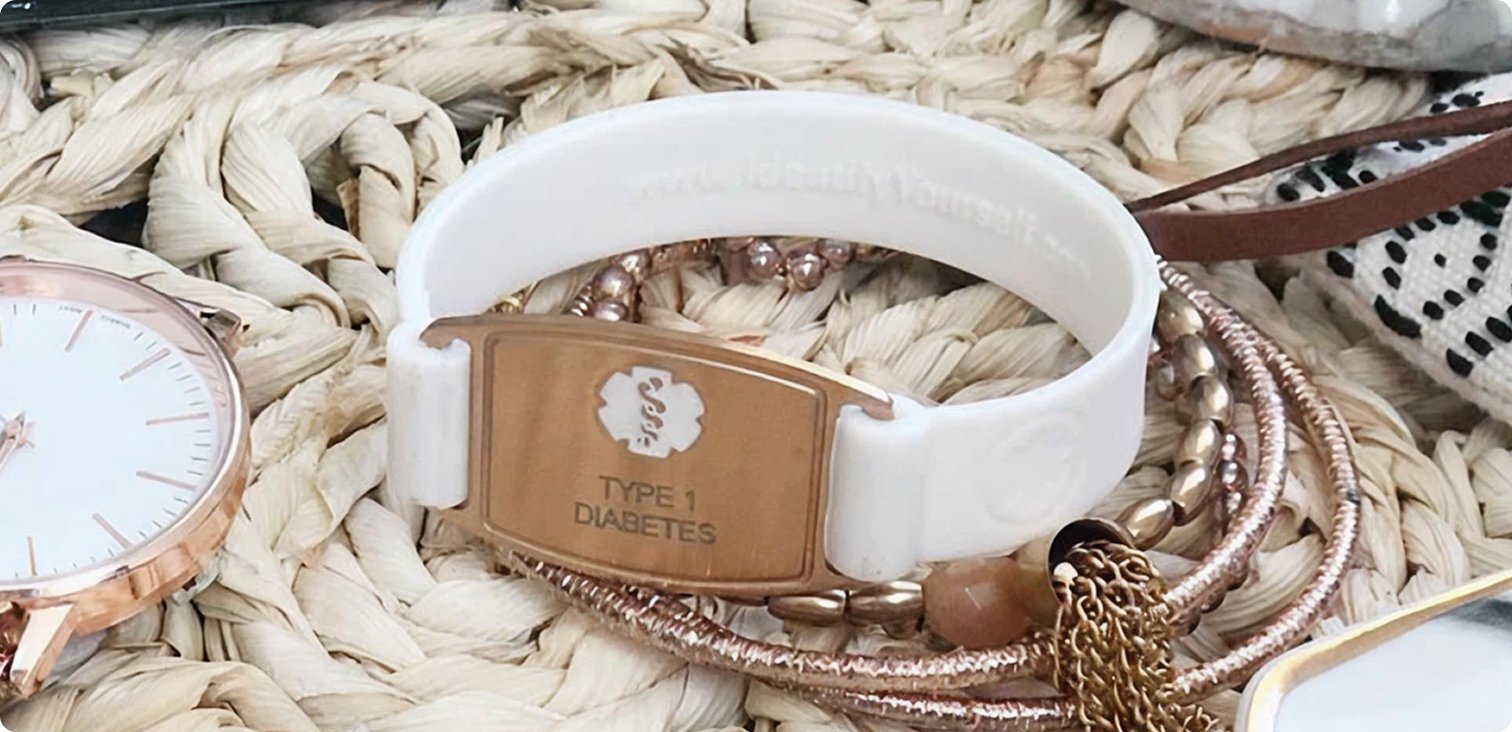
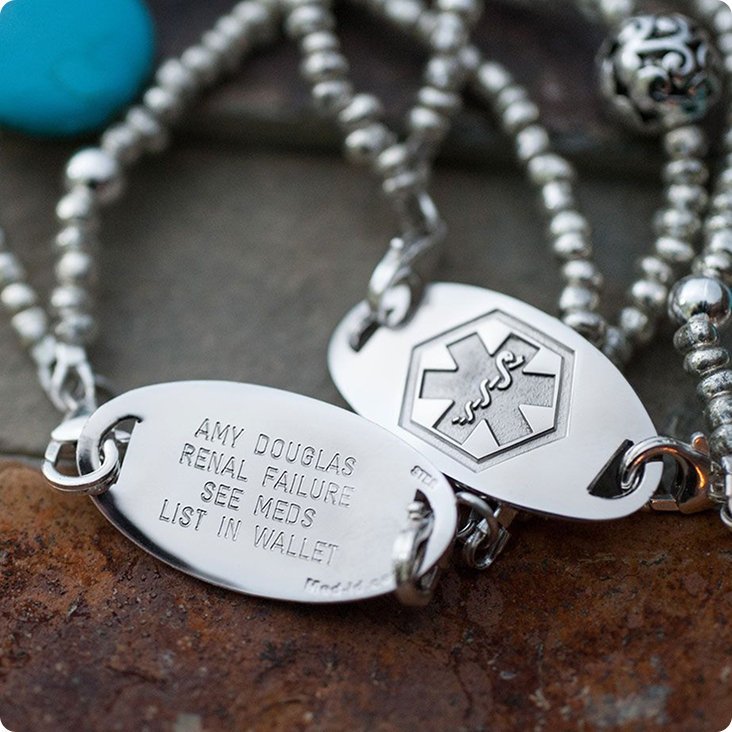
Engrave Your Medications
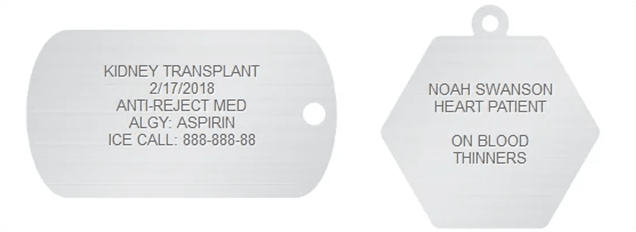
Any prescribed medications taken on a regular basis should be engraved on your ID. This could prevent drug interaction that increases with the use of multiple medications. Drug-on-drug interactions occur when two or more drugs react with each other. It is common to engrave prescription medicine that is taken on a long-term daily basis.
Examples of these are blood thinners, corticosteroids, and immunosuppressants.
Engraving Examples
- Warfarin
- Coumadin
- Apixaban (Eliquis)
- Dabigatran (Pradaxa)
- Edoxaban (Savaysa)
- Rivaroxaban (Xarelto)
- Calcineurin Inhibitors: Tacrolimus and Cyclosporine
- Antiproliferative agents: Mycophenolate Mofetil, Mycophenolate Sodium and Azathioprine
- mTOR inhibitor: Sirolimus
- Steroids: Prednisone
- Betamethasone (Celestone)
- Prednisone (Prednisone Intensol)
- Prednisolone (Orapred, Prelone)
- Triamcinolone (Aristospan, Kenalog)
- Methylprednisolone (Medrol, Depo-Medrol, Solu-Medrol)
- Dexamethasone
Additional Engraving Tips & Considerations

Consult Your Doctor
If you aren’t sure what to prioritize or feel your information is too long, ask your doctor what is most medically important to include and confirm commonly recognized abbreviations to help you save space.

List Medical Restrictions
Don’t forget to include critical restrictions for medical tests and procedures on your ID, such as MRI or contrast dyes. Note if you cannot undergo on MRI if you are allergic to contrast dyes.

Double-Check Your Spelling
Make sure your conditions, medications, and allergies are spelled correctly before you purchase. We highly recommend having a friend or family member review your text to spot any typos you might have missed.

Use Special Characters
If you need to separate information or make your engraving easier to read, use colons (:) and hyphens (-). These are fully supported on our medical IDs. Common special characters like colons (:) and hyphens (-) are fully supported on our medical IDs.
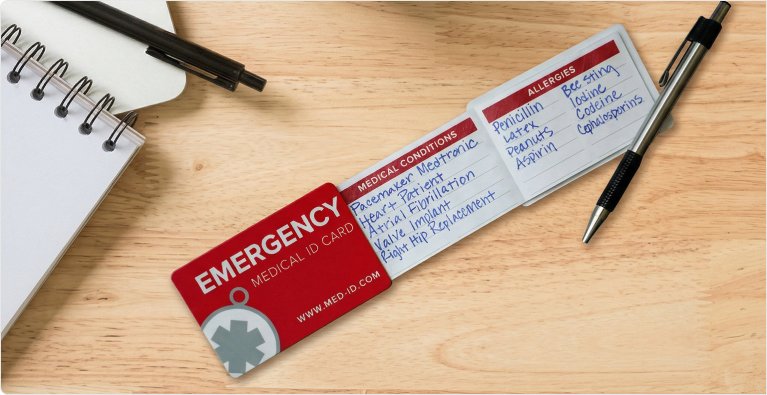
The Expandable Wallet Card
A wallet card is the ideal place to keep important information that either doesn’t fit on your medical ID or changes frequently. If you have plenty of room to list secondary conditions, list medications and alternative emergency contacts.
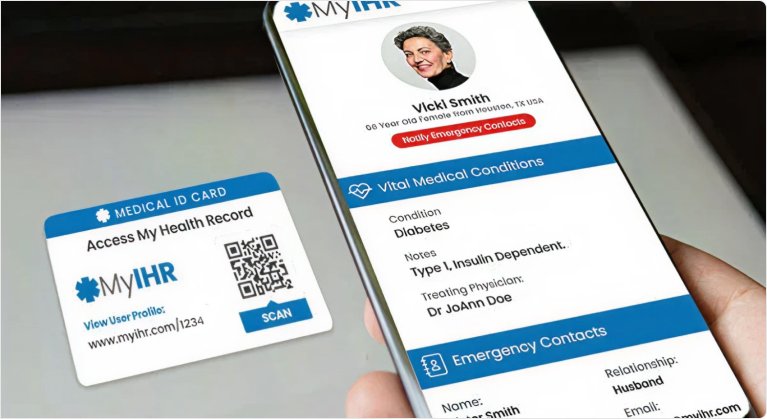
MyIHR (Interactive Health Record)
MyIHR is a secure online health profile that you can instantly update with your vital documents, medical conditions and emergency contacts. The perfect complement to your medical ID, MyIHR can be easily accessed at any time whether you need to recall important information during a doctor’s appointment or first responders need it during an emergency.